

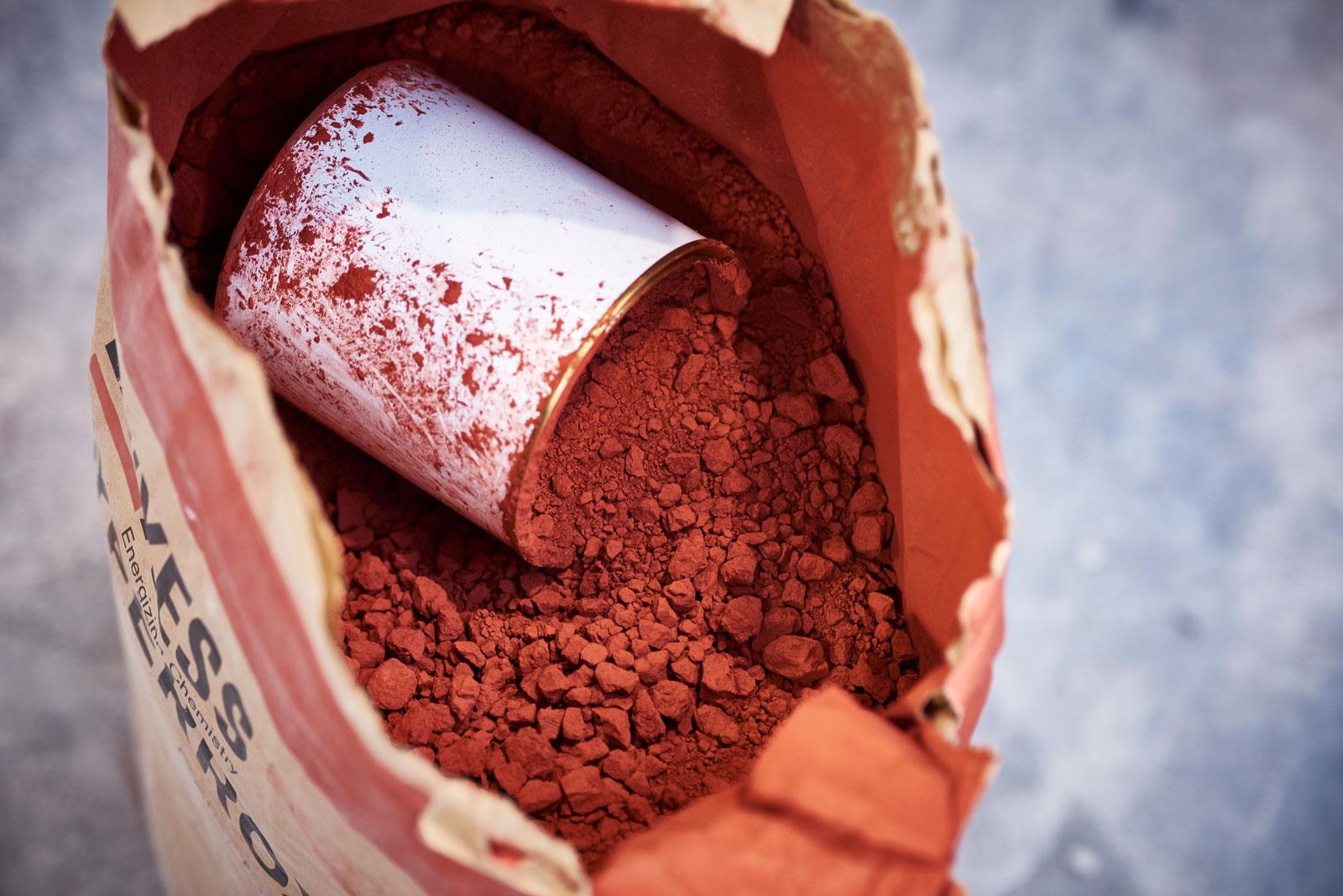
With more customers looking for green credentials when choosing paint, we take a look at some of the ‘natural’ options available.
Once seen as a niche choice for heritage work or eco-minded clients, ‘natural’ paint is moving firmly into the professional decorator’s toolkit. Typically made with ingredients such as earth and mineral pigments, chalk, clay, lime, linseed oil or other plant-based binders, these coatings appeal to customers looking for lower-impact finishes, breathable walls and a more authentic depth of colour. For painters and decorators, the opportunity is clear – natural paints can help meet growing demand for healthier interiors and sustainable specification, particularly in period properties, high-end residential schemes and projects where vapour permeability matters. As manufacturers refine formulations and expand colour ranges, natural paint is no longer just a lifestyle choice – it is becoming a practical option for the trade.
We hear from three manufacturers about their products and why you should consider them for your next project. Part two of this feature continues in the next issue.
Little Greene: A family affair
In an interiors landscape often driven by fleeting trends and mass production, Little Greene stands apart as a brand rooted in heritage, family, craftsmanship and environmental responsibility. This independent British paint manufacturer has built a reputation not only for beautiful, enduring colour, but also for a thoughtful approach to how those colours are made.
The company is named after The Little Greene Dye Works which operated on the outskirts of Manchester, supplying pigments and dyes to the region’s textile mills. The 18th Century hamlet is immortalised on a historic map on every paint tin.
While the science of paint has evolved, the core principles established in those early days remain unchanged. The company continues to honour a philosophy of creating colour without compromise, blending traditional craftsmanship with modern innovation. Headquartered near its original roots in Manchester, with manufacturing based in its own factory nestled in the foothills of Snowdonia, Little Greene is the only independent British paint maker still producing a complete range of traditional and modern finishes in the UK.
As a family-run business, this sense of continuity is central to its identity. Creative Director Ruth Mottershead reflects: “My father David Mottershead spent his early career working for international paint and pigment companies and having gained a wider knowledge of the industry, he kindled a passion for the science of colour and founded the Little Greene Paint Company in 1996. My brother and I quite literally grew up with Little Greene, visiting the factory in Snowdonia at weekends, painting our colour cards and suggesting colour names at the kitchen table. We still work together as a family, which brings a shared understanding and genuine care to everything we do. It was never our plan, but when we realised our father was looking to sell, both Ben and I, who were in completely different career paths, realised that Little Greene was so precious to us as a family, we couldn’t not join the business. We have never looked back, each bringing different skills to the business and it’s a joy to be able to work with the people I love. It’s a collaborative way of working that allows us to stay true to our values while continuing to evolve.”
At the heart of Little Greene’s appeal lies its dedication to superior formulation. Using only the finest natural, organic ingredients and safe synthetic pigments, the company produces paints with exceptional depth of colour, high opacity and outstanding coverage.
These richly pigmented formulations require fewer coats, making them both economical and efficient. Decorators in particular value this quality, alongside the durability of the brand’s finishes. The ‘Intelligent’ range, a collection of water-based paints designed for modern living offers hard-wearing, washable surfaces ideal for busy homes, without sacrificing aesthetic appeal. Equally popular is Absolute Matt Emulsion, prized for its chalky, flat finish and now enhanced with recycled content. These finishes demonstrate how performance and sustainability can go hand in hand.
Much of the manufacturing process remains reassuringly hands-on. Ingredients are still measured on a small scale, measured in kilograms rather than tonnes, and many stages are carried out by hand, by experienced craftspeople rather than automated machinery. Even sample pots are filled by hand, reinforcing the brand’s commitment to quality at every level. Environmental responsibility is not an afterthought for Little Greene – it is embedded in every aspect of the business. The company was among the first UK paint manufacturers to achieve the ISO 14001 environmental standard, and continues to prioritise sustainable practices across production, packaging and distribution. Water-based paints are formulated with virtually zero VOC content, making them low-odour and safer for both homes and the wider environment. Meanwhile, oil-based paints have been reformulated using sustainable vegetable oils.
One of the most compelling examples of this philosophy in action is the Re:mix collection, a pioneering initiative that transforms leftover and unwanted paint into new, usable colours. Each year, millions of litres of paint go to waste across the UK. Little Greene has addressed this issue by developing intelligent blending techniques that allow their waste paint to be reformulated into a curated palette of their most popular shades, This helps to reduce waste but also prevents up to 60,000 litres of raw materials from being lost annually. For consumers there is a bonus too, as well as being environmentally friendly, it’s sold at half the price
of the main collections, so it’s pocket friendly too.
As Ruth Mottershead puts it: “Re:mix is a way of tackling a significant problem while creating something genuinely beautiful and useful. This is an innovative solution that we’re incredibly proud of.”
Little Greene’s colour offering is as rich in history as it is in variety. Drawing on more than 300 years of decorative heritage, the brand has developed a palette that reflects key periods of interior design from the 17th Century through to the late 20th Century. Many shades have been carefully recreated from original colours found in some of the UK’s most treasured National Trust properties, while others have been developed to reflect today’s and tomorrow’s approach to colour.
Through ongoing research and its long-term partnership with the National Trust, Little Greene continues to rediscover authentic hues and revive historic wallpaper patterns for the contemporary home.
To make decorating more intuitive, colours can be explored by historical era, by colour, or through thoughtfully designed ‘Colour Scales’, tonal families of colours that allow for subtle, harmonious schemes throughout a room or an entire home.
Little Greene’s enduring appeal lies in its ability to balance past and present, combining centuries of decorative history with forward-thinking sustainability and innovation. As a family-run British manufacturer, it remains deeply connected to its roots while continuing to evolve for modern living.
Ruth Mottershead explains: “We are really proud of the relationships we have with our customers. I feel much of our appeal is our focus on quality, high-pigment paints and durable finishes, but increasingly we are seeing our commitment to being an eco-friendly, family business producing locally in the UK resonating with our customers. I absolutely believe it’s possible to create beautiful, high-quality paints and wallpapers with minimal environmental impact. Being an independent family business means we can make decisions based on what’s right for the environment, not just what’s commercially convenient.”
See littlegreene.com
Earthborn: Paint made with purpose
When Earthborn was founded in 2002, the paint industry was very different. Sustainability was rarely part of the conversation, and eco-conscious decorators had limited choice when it came to high-performing alternatives to conventional coatings. Earthborn was created to challenge that, to prove that paint could be kinder to people and the environment without compromising on finish, colour or durability.
From the beginning, the focus was on questioning what goes into paint and developing products with carefully selected ingredients. The result is a range designed not only to look good, but to perform well in real decorating environments, from everyday interior projects to sensitive restoration work.
One of Earthborn’s best known products is Claypaint, a distinctive interior finish containing more than 40 per cent clay. Unlike traditional emulsions, the clay content gives the paint a naturally breathable quality, helping to regulate moisture within a room. For decorators working on older properties, period homes or spaces where managing humidity is important, this breathability can be a valuable consideration.
The clay also contributes to the paint’s unique finish. It creates a soft, ultra-flat matt appearance with excellent depth of colour, while helping the coating to absorb rather than reflect light. The result is a natural looking surface that can bring warmth and character to interiors.
Earthborn’s approach to formulation goes beyond the choice of one ingredient. The company considers the entire lifecycle of its products, from raw materials and manufacturing through to packaging. All ingredients are listed, allowing decorators and customers to understand exactly what they are specifying.
A key part of this is reducing VOCs (Volatile Organic Compounds). Many conventional paints contain VOCs which can contribute to unpleasant odours during application and affect indoor air quality. Earthborn’s paints are virtually VOC-free, containing only trace levels, creating a more comfortable decorating experience with little to no traditional ‘paint smell’. This can be particularly beneficial in occupied properties, bedrooms, nurseries and other spaces where indoor air quality is a priority. In independent testing, the brand achieved Indoor Air Comfort GOLD certification with the results showing that after 28 days, no VOC emissions were detected, demonstrating excellent indoor air quality performance.
For professionals, performance remains essential. Eco credentials only matter if the product works on the job. Earthborn’s formulations are designed to provide excellent coverage, helping decorators achieve a quality finish with fewer coats and less product waste. The range includes interior emulsions, durable finishes, primers, wood and furniture paints, as well as exterior coatings.
Durability is also central to the range. The Lifestyle collection, for example, provides a hard-wearing finish suited to busy areas where surfaces need to withstand everyday use. Similarly, its ECOPRO range is designed for busy decorators on residential and commercial jobs, and provides a hard-wearing, washable finish that’s easy to apply and quick drying. Choosing the right product for the environment means a finish can remain looking better for longer, reducing the need for frequent redecoration.
Earthborn also produces breathable exterior finishes, particularly suited to traditional buildings where moisture movement through walls is an important factor. Mineral-based coatings allow substrates to breathe naturally, making them a useful option for renovation and heritage projects.
The brand’s environmental commitments extend beyond the paint itself. Recyclable tins, responsible packaging choices and biodegradable materials all form part of Earthborn’s wider approach. Even the protective packaging used for deliveries is designed with sustainability in mind.
As the first UK paint brand to achieve the EU Ecolabel for Indoor Paints and Varnishes, Earthborn has always believed that independent certification and testing matters. These accreditations help provide reassurance that environmental claims are backed by recognised standards.
For professional decorators, specifying paint is about more than colour. It is about understanding how a product behaves, how it performs over time and how it contributes to the finished space. Earthborn’s aim has always been to create coatings that combine practical performance with a more considered approach to what paint can be.
KEIM: breathable mineral paints
Search online for ‘natural paint’ and you will quickly find a crowded marketplace, with dozens of brands using similar language around sustainability, breathability and low-impact decorating. For painters and decorators, that can make product choice harder rather than easier. The phrase ‘natural paint’ is not tightly regulated, and it can cover everything from clay-based interior coatings to technically advanced mineral systems designed for demanding heritage, commercial and exterior projects.
KEIM Mineral Paints sits firmly in the latter camp. It may not always be the loudest name in the decorating aisle, but among specifiers, conservation professionals and contractors working on breathable substrates, it has built a reputation for mineral coatings that are durable, vapour permeable and suited to the realities of UK buildings. For decorators looking to offer clients a more sustainable, longer-lasting finish, it is a range worth understanding.
The key point for decorators is that KEIM products do not behave like conventional film-forming paints. Acrylic and latex-based coatings can create a plastic-like skin over the surface. On the wrong substrate, particularly brickwork, lime plaster, stucco, older render or damp-prone masonry, that can trap moisture behind the coating. Over time, the result can be blistering, peeling, mould growth or surface failure – problems no professional wants to be called back to fix.
Mineral paint systems are different. KEIM coatings allow water vapour to pass through the finish while resisting liquid water ingress, helping the building fabric to dry out naturally. On heritage work, lime-based substrates and properties with persistent moisture challenges, that breathability is not a marketing extra – it is central to getting the job right.
Durability counts
Longevity matters in trade work. KEIM paints are designed for long service life, strong colour stability and resistance to UV degradation. For the decorator, this has a practical value: fewer remedial visits, fewer awkward conversations with clients, and a finished project that continues to reflect well on the workmanship years after handover.
Maintenance is also straightforward. In many cases, a simple wash down with cold water and a mild detergent is enough to freshen the surface. That is a useful message for homeowners, facilities managers and clients responsible for public or high-traffic buildings, where whole life value can matter as much as the initial decorating cost.
Although KEIM is often associated with exterior mineral masonry paints, the range extends across interiors, renders, concrete finishes, colourwashes and specialist systems. For decorators, that breadth can make it easier to keep one coherent specification across different parts of a project, rather than mixing unrelated products and hoping they perform together.
Interior products such as KEIM Innostar are aimed at fast, efficient decoration where opacity and turnaround time are important. KEIM Twinstar offers a wet-on-wet approach that can reduce waiting time between coats, which may be particularly useful on commercial programmes, access-restricted jobs or projects where scaffold and plant hire costs need to be tightly controlled.
There are also specialist systems for more demanding environments. KEIM Soldalit-ME is designed for exterior use, including exposed and coastal locations, while KEIM Ecosil-ME is an interior paint developed to help improve air quality by reducing certain noxious gases and odours. That makes it relevant for schools, healthcare settings, public buildings and heavily used interiors where indoor environment is part of the brief.
Sustainability with substance
Sustainability is now part of everyday conversation with clients, but decorators still need products that perform on site. KEIM’s heritage dates back to 1878, and its mineral approach remains central to the brand. The company’s message – kind to you, kind to use and kind to the environment – is supported by independent assessment, with many products carrying Cradle to Cradle certification.
Fire performance is another important consideration, particularly for decorators working on residential buildings over 11 metres, public buildings and safety-critical environments. Many KEIM paint systems achieve A2-s1, d0 classification, meaning they offer a high level of fire performance, with little or no smoke and no flaming droplets within the classification criteria. For contractors, that can provide valuable reassurance when working to modern compliance expectations.
For everyday trade use, the sustainability argument is also practical. Durable finishes mean longer repaint cycles. Breathable coatings reduce the risk of moisture-related failures. Low-odour and low-VOC systems can help minimise disruption in occupied buildings. Together, these benefits can support a stronger professional offer to clients who want both environmental credibility and a job that lasts.
For painters and decorators, KEIM is not simply another ‘eco paint’ brand. Its strength lies in combining mineral technology, breathability, durability and sustainability in systems that can be specified across heritage, commercial, public sector and new-build projects. Used in the right setting, it can help decorators deliver finishes that are better for the building, better for the client and better for long-term professional reputation. In short, KEIM does what it says on the tin
– and for the trade, that matters.
This article first appeared in the autumn 2026 issue of Decorating Matters. Part two follows in the winter issue.