

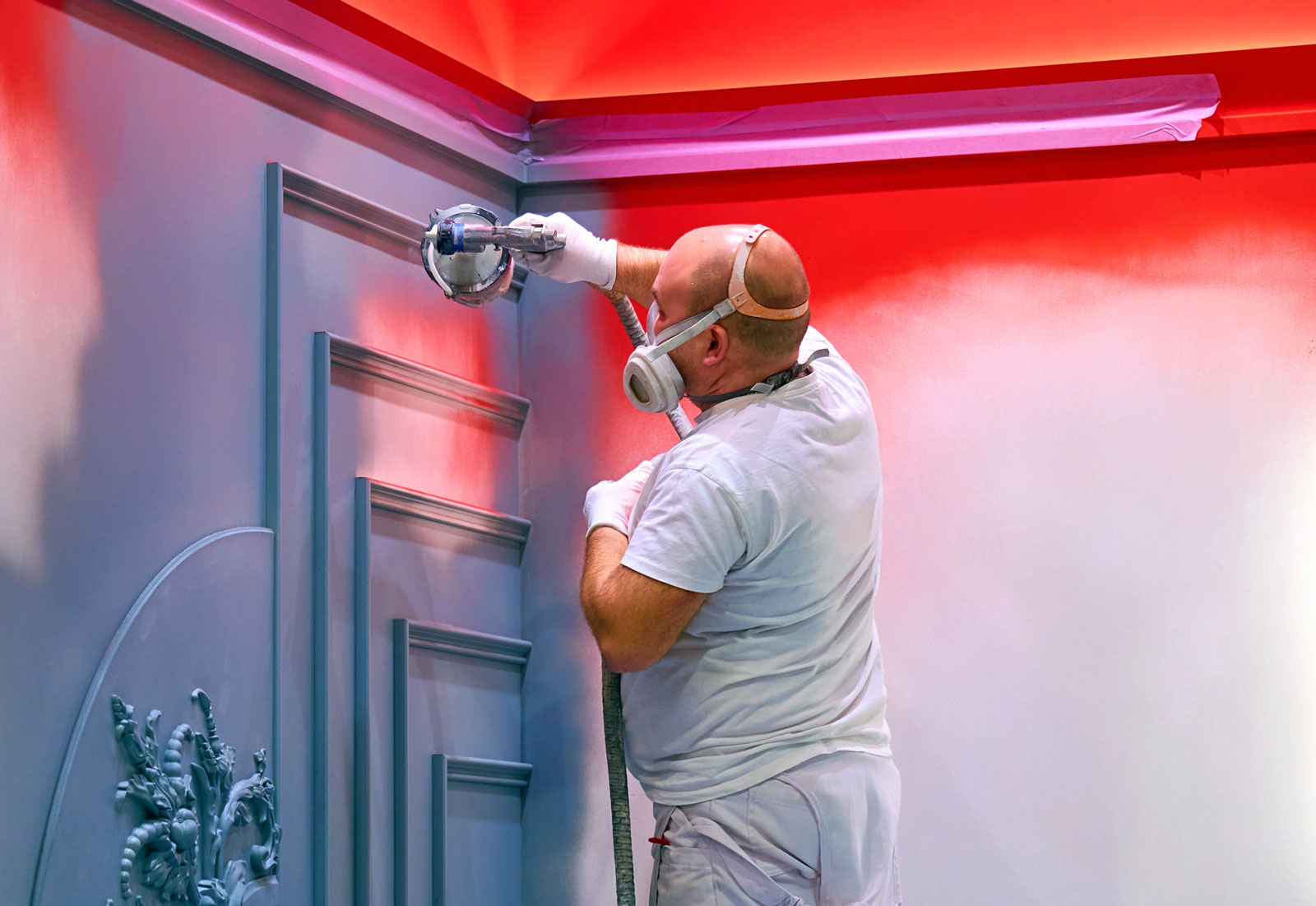
Neil Whiteford from Roxburgh Insurance Brokers paints a picture of risk, responsibility and growth, showing how businesses must adapt their cover as they expand.
My previous article (Decorating Matters, Winter 2025) covered the core insurance requirements for painters and decorators. Now, I want to go a step further and focus on businesses that are growing or already operating at scale.
As your business develops, the risks change quickly. Taking on bigger contracts, employing staff, working across multiple sites: these all bring a different level of responsibility. What might have been perfectly adequate cover when you were working on smaller domestic jobs can very quickly become insufficient.
Painting and decorating isn’t always seen as high risk, but in reality, especially at a commercial level, there’s a lot more exposure than people expect. You’re working in live environments, often around other trades, clients, or the public. It only takes one incident – a spill, a trip hazard, or accidental damage – for a relatively small mistake to turn into a significant claim.
On top of that, you’ve got the added responsibility of managing people, meeting contractual requirements and keeping projects on track. All of that increases pressure – and risk.
With more than 60 years’ experience, and as the approved broker to the Scottish Decorators’ Federation, Roxburgh Insurance Brokers works closely with decorators across the UK and sees firsthand how insurance needs to evolve as businesses grow.
Getting the basics right (at scale) Public liability insurance
For most decorators, public liability is the starting point – but once you move into larger or commercial work, it becomes far more than just a “nice to have”.
In many cases, it’s a requirement just to get through the door.
Working in busier environments means the chances of something going wrong increase, and when it does, the costs can be significantly higher. Damaging high-end flooring, affecting other contractors on site, or causing injury in a public space can all lead to serious claims.
That’s why most larger jobs now require cover in the region of £5 million to £10 million. Without that level
of protection in place, you’ll often find yourself excluded from tenders before you’ve even had a chance to quote.
Employers’ liability insurance
If you employ anyone, even on a casual or part-time basis, this is a legal requirement. But beyond that, it becomes increasingly important as your team grows.
The more people you have working across different sites, the greater the chance of accidents or longer-term issues arising. Falls from height, lifting injuries or even health issues linked to materials can all lead to claims.
The Health and Safety Executive (HSE) takes this seriously, and penalties for not having the correct cover can be significant.
More importantly though, it’s about protecting your team and showing that you run a professional, responsible business – something clients are paying much closer attention to now.
Tools and equipment
At a larger scale, tools and equipment quickly become a major investment.
It’s no longer just brushes and ladders. You may have spray systems, access equipment and materials spread across multiple sites. Losing those, even temporarily, can cause real disruption.
Tool theft is still one of the biggest issues in the trade, particularly from work vans. And when it happens,
it’s not just the replacement cost, it’s the lost time, delayed jobs and knock-on effect on your schedule.
Having the right cover in place means you can get back up and running quickly, rather than scrambling
to replace everything at your own expense.
Vehicles and fleet
Once you move beyond a single van, things start to become more complex.
Multiple vehicles, different drivers, tools being transported between sites – it all adds up. Standard motor insurance often doesn’t fully reflect how vehicles are used in a growing decorating business.
A proper commercial or fleet policy gives you flexibility, keeps everything under one structure, and makes sure you’re covered for the way you operate day to day.
It also helps minimise disruption if something does go wrong, which is key when you’ve got multiple jobs running at once.
Personal accident cover
This is one cover that often gets overlooked, particularly by business owners.
If you’re unable to work due to an injury, the impact can be immediate – not just personally, but across your business. Projects stall, income drops and pressure builds quickly.
Personal accident cover provides some financial breathing space. It won’t solve everything, but it can make a difficult situation far more manageable while you recover.
For business owners and key members of the team, it’s worth considering.
Where insurance really starts to matter
As businesses grow, there’s a point where insurance stops being about individual policies and becomes
part of how the business is structured and protected.
Business interruption
This is one of the most underestimated areas.
Most people think about the physical loss – tools stolen, van damaged, premises flooded – but often
the bigger issue is what happens next.
Missed work, ongoing costs, delays to projects: it can all build up very quickly.
Business interruption cover is there to keep things steady if you can’t operate for a period of time. For
larger businesses with ongoing commitments, that stability can make a huge difference.
Contract works
Once you’re working on bigger or staged projects, this becomes much more relevant.
If something happens before a job is completed – fire, flood, vandalism – you could be responsible for putting everything right, even if it wasn’t directly your fault.
Contract works insurance protects what you’ve already done, as well as materials on site. Without it, the cost of redoing work can quickly eat into your margins.
Professional indemnity
This is becoming more important as decorators take on more advisory roles.
If you’re recommending products, finishes or systems, there’s always a risk that something doesn’t perform as expected. In those cases, the issue isn’t physical damage – it’s financial loss for the client.
Professional indemnity cover can protect against that type of claim and is increasingly relevant on higher-end or more complex projects.
Commercial legal expenses insurance
Often overlooked, this becomes increasingly important as businesses grow and become more structured.
As you take on larger contracts, employ more staff and deal with a wider range of clients and suppliers, the likelihood of disputes increases. Not all issues can be resolved informally and legal costs can escalate quickly – even for relatively straightforward matters.
Commercial legal expenses insurance can help cover:
- Contract disputes with clients or suppliers
- Employment-related issues
- Debt recovery
- Tax investigations.
Having access to legal support when you need it, and knowing the associated costs are covered, can make a significant difference. It allows you to deal with issues professionally without them becoming a financial burden on the business.
Management liability
For limited companies, this is about protecting the individuals behind the business. As you grow, so does the potential for disputes – whether that’s with employees or from a regulatory perspective.
Management liability insurance helps protect directors personally if claims are made against them. It’s not always something people think about early on, but it becomes more relevant as the business becomes more structured.
Final thoughts
At a certain point, insurance stops being something you “just have” and becomes part of how your business operates. It helps you:
- Access better contracts
- Protect your team and your assets
- Manage disruption when things go wrong
- Maintain stability as you grow.
Working with an insurance broker who understands the trade makes a big difference. Roxburgh Insurance Brokers works closely with decorating businesses and understands how these risks evolve over time.
Ultimately, the goal is simple – you focus on delivering the work, knowing the business behind it is properly protected.